
Something really surprising (and welcomed) has been happening recently: our readers have been reaching out to us through DMs and email and asking questions. This has been one of the most encouraging and exciting developments since we started this project, so thank you. We’re going to start posting a weekly blog-style article answering your questions, so please keep them coming.
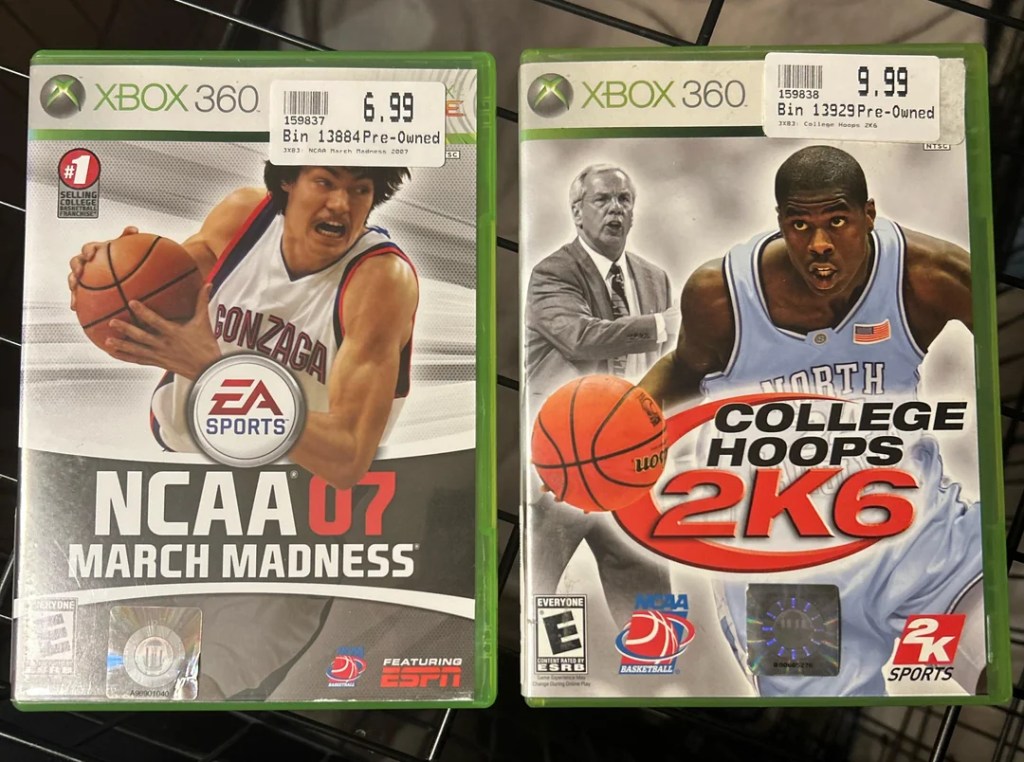
One of the most frequent questions we’ve received lately has actually been about college sports video games. Now, even if BYU–Idaho were to bring back athletics, because it wouldn’t likely be at the NCAA Division I level, it’s almost guaranteed that BYU–I would never show up in an EA or 2K game. That said, we know many of you have deep ties to local schools and to BYU itself, so the interest makes sense.
Several members of our team have direct experience working with collegiate property licensing, and a few even worked with EA when they brought back their college football title. After a lengthy email chain sorting through the current mess, here’s what we know about the increasingly unlikely college basketball games that may or may not be in development.
When EA Sports announced the long-awaited return of its college football franchise, the immediate reaction from many fans was excitement mixed with a simple follow-up question: what about basketball? For years, college basketball video games have held this cult-classic aura. People still talk about College Hoops 2K8 like it was some kind of holy grail. It was the game where you could take Gonzaga, Davidson, or some random mid-major and shock the world. It captured the magic of March Madness in a way that felt authentic. Yet here we are in 2025, with college football making a triumphant return and basketball still sitting on the sidelines, trapped in a maze of licensing battles, corporate competition, and market hesitation.
At first glance, basketball should be the easier play. There are fewer players on the court, more name recognition for the stars, and a tournament that commands national attention every spring. But when you start peeling back the layers, the complications pile up fast. The first problem is licensing. College football already had a centralized enough system to make EA’s return feasible. Deals with the College Football Players Association, schools, and conferences could be pulled together into something manageable. For basketball, the scale is triple. Over 350 Division I programs for men, and another 350-plus for women, each with their own quirks, logos, mascots, and arena rights. Trying to stitch all of that into one clean package isn’t just complicated, it’s borderline impossible without burning through massive amounts of money.
And even if you cleared that hurdle, you hit the roster issue. Football rosters are stable enough that you can lock in 85 scholarship players and know most of them will be around for three or four years. Basketball is a different beast. Stars leave after one season. The transfer portal is a revolving door. International players bring their own unique NIL complications. By the time you get a roster built, it’s already obsolete. A developer would be renegotiating likenesses almost every year just to keep things current. That’s a logistical nightmare compared to football.
Then there’s the NCAA’s crown jewel: March Madness. In football, the postseason is controlled by conferences and the College Football Playoff committee, which means EA could work around the NCAA itself. Basketball doesn’t have that luxury. March Madness is 100 percent NCAA property. No matter how good a game might be, if it doesn’t include the tournament, it’s going to feel empty. That puts the NCAA in the driver’s seat, and historically they’ve been protective, even reluctant, about handing out those rights. They’ve signaled they would be on board if the game included every Division I program and covered both men’s and women’s tournaments. But when the publishers can’t even agree on how many teams should be in the game, it stalls out.
Broadcast rights only make things messier. Football’s presentation is straightforward: a handful of TV partners, some bowl game branding, and a few iconic stadiums. Basketball is fractured into hundreds of arenas, each with different sponsorships. Regular season games are split across ESPN, CBS, Turner, Fox, and local networks. Then you add in the conference tournaments, which matter deeply to fans but bring in their own logos, sponsors, and rights agreements. To make a game that feels real, you’d have to negotiate with half the sports media landscape. That’s a big ask.
Even if you could clear every legal and logistical hurdle, there’s the financial elephant in the room. College football games have always sold better. They’ve built a strong following and the hype for College Football 25 shows how much demand is there. College basketball, on the other hand, has never been a sales juggernaut. EA killed its NCAA Basketball series in 2009 because revenues kept falling. 2K’s College Hoops 2K8 is beloved in hindsight, but it failed commercially at the time. So now publishers are staring at a math problem: spend a fortune on licensing for basketball and hope that the niche audience is big enough to justify it.
The legal history doesn’t help. Both basketball and football titles were caught up in the Ed O’Bannon lawsuit, which argued that EA and the NCAA were using player likenesses without pay. That lawsuit is why both games disappeared. Football found a way back once NIL reforms made paying players possible. Basketball has all the same legal baggage, plus the NCAA bottleneck on its most important event. That’s why it died first, and why it’s been harder to revive.
The latest wrinkle is the EA vs. 2K standoff. EA’s vision was ambitious: a standalone game with all 350-plus men’s and women’s programs, every conference, full NCAA backing, and NIL payments across the board. About 300 schools and 20 conferences were already signed on through the Collegiate Licensing Company. The idea was to release by 2028. 2K, meanwhile, had a different plan. Instead of going all in, it wanted to start smaller, weaving college programs into its NBA 2K franchise as downloadable content. If that worked, they could expand. They’ve already secured deals with several blue-blood programs.
The sticking point is exclusivity. EA doesn’t want to move forward unless it can guarantee that every school is locked in with them. Their argument is that without exclusivity, the costs don’t make sense. 2K doesn’t care about exclusivity because they already dominate basketball with NBA 2K and can afford to experiment. EA hasn’t had a relevant basketball title since NBA Live 19, and if 2K can beat them to market with college content inside NBA 2K, EA’s standalone game might be dead on arrival. That’s why EA just rescinded its licensing offer after some schools signed with 2K. The whole project is now on ice.
Fans are understandably frustrated. Hardcore players want every Division I school represented, just like in the old days. Casual players at least want March Madness. 2K’s promise of “more than 100 programs” doesn’t cut it for either group, since it leaves out two-thirds of Division I. EA’s version matched the fans’ dream better, but it’s stalled by business strategy. On social media, the backlash has been loud. Some are hoping the pressure forces 2K to broaden its scope, but others are already resigning themselves to a watered-down DLC rather than the comprehensive game they’ve been craving.
The NCAA itself isn’t thrilled either. In a statement, they admitted disappointment that the market is moving toward fragmented deals rather than a unified product. They were hoping to see every program included under one banner, but with EA stepping back and 2K pushing ahead in a different direction, that vision is fading fast.
So where does this leave us? A few possible paths still exist. 2K might expand if fan backlash continues. EA could come back later if exclusivity ever becomes feasible again. A hybrid model could launch with limited teams and grow through DLC over several years. Or maybe an indie developer tries to fill the void with customizable rosters and community mods. But right now, the idea of a full, all-inclusive college basketball video game featuring both men’s and women’s teams, complete with March Madness, looks like it’s been shelved for the foreseeable future.
The bottom line is that football had a clearer path. Its licensing was simpler, its rosters were more stable, its postseason wasn’t under NCAA lockdown, and its sales history gave publishers confidence. Basketball had all the opposite conditions: fractured licensing, unstable rosters, heavy NCAA control, and weaker commercial track records. Pile on a corporate tug-of-war between EA and 2K, and the road gets even bumpier.
For you, our readers, that means the wait continues. College football is back and thriving, but if you were hoping to cut down the virtual nets at the Final Four any time soon, you’ll probably be waiting a long while. Until the business side of things finds common ground, the dream of reviving college basketball gaming glory will stay stuck in the past.
 BYU-I Sports
Leave a comment