
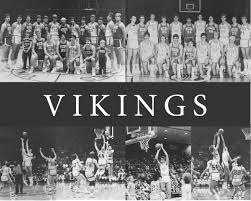
When BYU–Idaho shut down its varsity athletics program in 2000, the university shifted its focus toward intramural and recreational competition, citing financial and mission-based reasons. Now, more than two decades later, conversations about a potential return to intercollegiate athletics naturally raise the question: which sports would be the foundation of a new program?
The answer is guided by precedent. Similar private, faith-oriented schools at the NCAA Division II, Division III, and NAIA levels all build their athletic programs around a familiar core: basketball, soccer, cross country, track and field, volleyball, and softball. BYU–Idaho’s own proposed 12-sport portfolio mirrors this pattern, creating a realistic roadmap for re-entry.
The Proposed BYU–Idaho Portfolio
A balanced program must serve both genders, meet seasonal distribution requirements, and stay within financial and facility constraints. The following lineup has been suggested as the most likely fit:
- Men’s (5): Basketball, Soccer, Cross Country, Indoor Track, Outdoor Track
- Women’s (6): Basketball, Volleyball, Soccer, Cross Country, Indoor Track, Outdoor Track, Softball
- Other (1): Esports
- Total: 12
This structure is lean but complete. It reaches the NCAA minimum of 10 sports for Division II and Division III while also satisfying the 12-sport minimum for the NAIA once esports is counted. It also mirrors the sports offered by many peer institutions in the region.
Why These Sports?
Basketball (Men’s and Women’s)
Basketball is the universal anchor of small-college athletics. All governing bodies require it, and every conference in the West sponsors it. The infrastructure already exists on campus in the BYU–Idaho Center, which seats over 15,000 and could easily serve as a top-tier venue.
Soccer (Men’s and Women’s)
Soccer has become the growth sport of small-college athletics. It requires moderate roster sizes (20–30 players), relatively low equipment costs, and a single field that can be shared across genders. Regionally, nearly every Division II, Division III, and NAIA conference sponsors men’s and women’s soccer, making it an obvious inclusion.
Cross Country and Track & Field
Distance running and track are among the most efficient sports to sponsor. Cross country requires minimal facility investment, and track leverages shared coaching staffs for indoor and outdoor teams. Together they create opportunities for a large number of student-athletes without the heavy budget footprint of football or baseball.
Volleyball (Women’s)
Women’s volleyball is one of the most popular sports in the Northwest and Intermountain West. The sport has strong high school participation rates in Idaho and surrounding states, making recruiting pipelines natural. Volleyball also fits BYU–Idaho’s culture of student engagement, with games that can fill existing campus gyms.
Softball (Women’s)
Softball complements baseball but with a smaller roster and more manageable facilities. It is a core women’s team sport in every NAIA and NCAA conference in the region. Adding softball also supports Title IX balance by providing women’s roster opportunities comparable to men’s soccer.
Esports
Although not recognized by the NCAA, esports is an emerging varsity offering at NAIA institutions, including members of the Cascade Collegiate Conference (CCC). BYU–Idaho already has an active student gaming community, making esports a low-cost, high-engagement addition that helps reach the 12-sport threshold required by the NAIA.
Conference Alignment Options
The viability of these sports also depends on conference affiliation. Without a league home, programs cannot participate in postseason play or build stable schedules. Four conferences emerge as realistic options.
NCAA Division II – Rocky Mountain Athletic Conference (RMAC)
The RMAC includes schools in Colorado, Utah, and New Mexico. It sponsors every sport in the BYU–Idaho proposal except esports. This lineup mirrors Westminster College (Salt Lake City), which competes in basketball, soccer, track, cross country, volleyball, and softball. The main challenge is travel—BYU–Idaho would face long trips to Colorado for most contests.
Fit: Structurally sound, but heavy travel and scholarship requirements raise costs.
NCAA Division III – Northwest Conference (NWC)
The NWC is home to private colleges such as George Fox, Willamette, Whitworth, and Pacific Lutheran. BYU–Idaho’s proposed lineup matches their offerings almost exactly. The absence of athletic scholarships makes this path financially sustainable, and the academic and faith-based culture of the NWC would align closely with BYU–Idaho.
Fit: Very strong cultural and athletic alignment. Travel is long but consistent with other members.
NAIA – Cascade Collegiate Conference (CCC)
The CCC includes schools in Idaho, Oregon, and Montana. It is a perfect geographic fit and already recognizes esports as a varsity sport, making it easier for BYU–Idaho to reach the NAIA’s 12-sport threshold. Every proposed sport is well-established within the CCC.
Fit: Excellent. Close rivals, religious and private peers, and esports recognition.
NAIA – Frontier Conference
Centered in Montana, the Frontier sponsors most of BYU–Idaho’s proposed sports but has weaker sponsorship in men’s soccer. Esports could still count toward the NAIA requirement, but soccer would be less integrated. Travel is comparable to the CCC but with fewer nearby opponents.
Fit: Moderate. Works if BYU–Idaho emphasizes soccer and esports as growth sports.
Why Not Other Sports?
When schools reinstate or add athletics, some ask about baseball, swimming, or football. Each comes with barriers that make them unlikely at BYU–Idaho.
- Football: Costs are prohibitive, as football consumes more than half of most small-college budgets. BYU–Idaho has no natural football conference fit.
- Baseball: Larger rosters and the need for specialized facilities make baseball more expensive than softball, with less return in terms of gender equity.
- Swimming or Wrestling: Both require major facility investments and have less regional conference support compared to track, basketball, and soccer.
By contrast, the proposed core lineup hits the sweet spot: strong regional participation, manageable costs, and natural conference alignment.
Comparative Conference Snapshot
| Conference | Governing Body | Core Sports Match | Esports Recognition | Geographic Fit | Financial Model |
|---|---|---|---|---|---|
| RMAC | NCAA DII | All except esports | No | Heavy travel (CO/NM) | Scholarships required |
| NWC | NCAA DIII | All core sports | No | Long travel (WA/OR) | No scholarships |
| CCC | NAIA | Full match | Yes | Strong (ID/OR/MT) | Scholarships optional |
| Frontier | NAIA | Soccer gap | Yes | Moderate (MT) | Scholarships optional |
If BYU–Idaho brings back athletics, the most likely sports to form the foundation are those already proven at similar small-college institutions:
- Men’s and Women’s Basketball – required and universal.
- Men’s and Women’s Soccer – efficient, regionally strong.
- Cross Country and Track & Field – high participation, low cost.
- Women’s Volleyball – popular, culturally strong.
- Women’s Softball – Title IX balance and regional sponsorship.
- Esports – emerging, cost-effective, NAIA recognized.
Final Take
The best cultural and geographic fit is the NAIA Cascade Collegiate Conference, where BYU–Idaho would slot seamlessly among peers in Idaho, Oregon, and Montana. The strongest NCAA option is the Division III Northwest Conference, aligning with academic mission and financial sustainability. The RMAC (Division II) path is viable but expensive, while the Frontier Conference (NAIA) serves as a fallback with weaker soccer support.
In short, if varsity sports return to Rexburg, expect basketball, soccer, cross country, track, volleyball, softball, and esports—not football, baseball, or swimming. BYU–Idaho would follow the model of its regional peers, emphasizing balance, sustainability, and cultural fit rather than chasing the high-cost sports that have sunk many small-college programs.
 BYU-I Sports
Leave a comment