
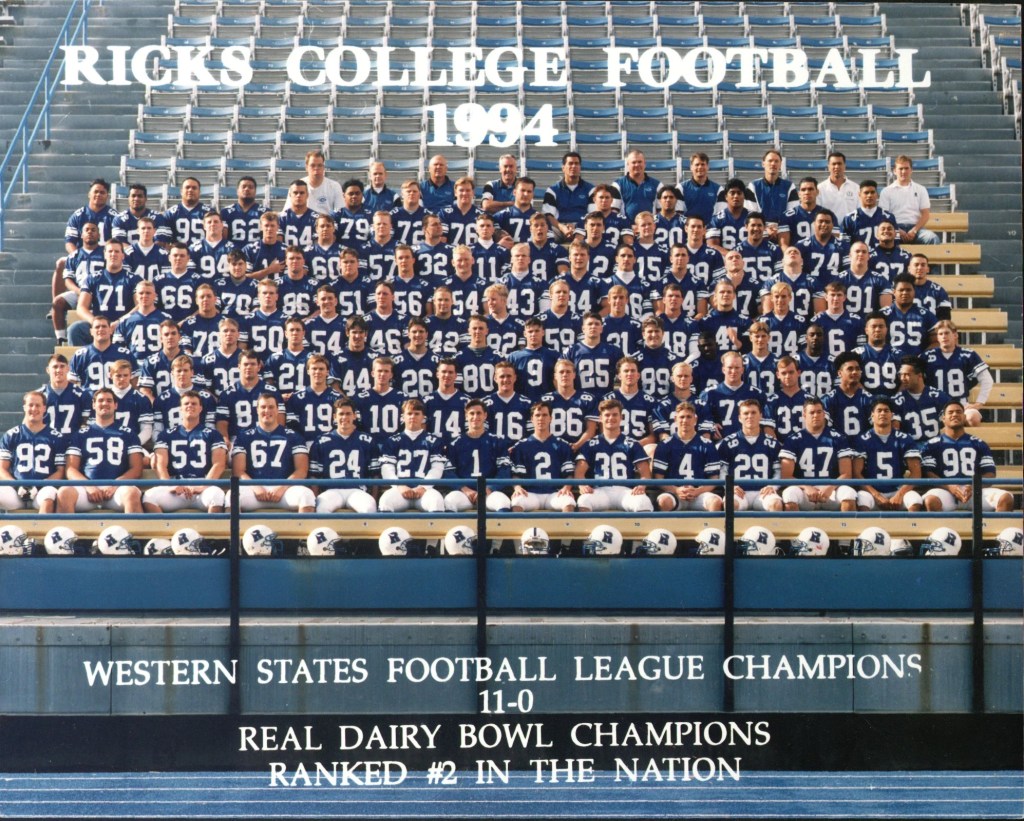
When BYU–Idaho eliminated varsity athletics in 2000, the university chose to emphasize its academic and spiritual mission while shifting sports to an intramural and competitive activities model. Now, with conversations about reinstating varsity athletics surfacing, the question is not just if sports return, but where the school might land within the national landscape. That choice hinges on the minimum sport sponsorship requirements of the major governing bodies—NCAA Division II, NCAA Division III, and the NAIA.
Sport Sponsorship Requirements at a Glance
Every governing body sets baseline requirements for how many sports an institution must field to maintain active membership and championship eligibility.
NCAA Division II
- Minimum sports: 10 (at least 5 men’s and 5 women’s OR 4 men’s and 6 women’s).
- Seasonal balance: At least two sports in each season (fall, winter, spring).
- Mandates: Must sponsor men’s and women’s basketball, plus two team sports for each gender.
- Scholarships: Allowed on an equivalency model.
(Source: NCAA Division II Manual)
NCAA Division III
- Minimum sports: 10 (same gender split options: 5/5 or 4/6).
- Seasonal balance: At least three sports per season across genders.
- Mandates: Men’s and women’s basketball required.
- Scholarships: Prohibited. Institutions may award only academic or need-based aid.
(Source: NCAA Division III Manual)
NAIA
- Minimum sports: 12 total (6 men’s and 6 women’s).
- Seasonal balance: At least two per season for each gender.
- Mandates: Flexible—football is optional, but basketball is nearly universal.
- Scholarships: Permitted on an equivalency basis, though with lower caps than NCAA Division II.
(Source: NAIA Handbook)
BYU–Idaho’s Proposed Portfolio
For a restart, BYU–Idaho would need to build a balanced, cost-conscious lineup that clears the thresholds of all possible affiliations. A projected mix of 12 programs—11 traditional sports plus esports—hits the benchmarks for NCAA Division II, NCAA Division III, and NAIA membership.
Men’s Sports (5): Basketball, Soccer, Cross Country, Indoor Track, Outdoor Track
Women’s Sports (6): Basketball, Volleyball, Soccer, Cross Country, Indoor Track, Outdoor Track, Softball
Other (1): Esports (recognized by NAIA, varsity/club hybrid elsewhere)
Total: 12
This structure keeps costs manageable (track and cross-country overlap staff/facilities) while ensuring broad gender equity and year-round competition.
Conference Fits
Division II – Rocky Mountain Athletic Conference (RMAC)
The RMAC stretches across Colorado, New Mexico, Utah, and surrounding states. Every proposed BYU–Idaho sport is already sponsored within the league, from volleyball to track and softball. The downside is travel costs—Colorado is the hub. RMAC membership would align BYU–Idaho with Westminster (UT), a peer institution, but would require significant scholarship investment.
Verdict: Possible but expensive. RMAC is a fit structurally, but high costs and heavy travel make it a stretch.
Division III – Northwest Conference (NWC)
The NWC includes George Fox, Willamette, Whitworth, and other private, academically oriented schools in Oregon and Washington. BYU–Idaho’s lineup mirrors existing members almost exactly. The absence of athletic scholarships makes this route financially sustainable and more in line with BYU–Idaho’s historic philosophy.
Verdict: Strong cultural and competitive fit. NWC would minimize financial pressure and align with peer schools.
NAIA – Cascade Collegiate Conference (CCC)
The CCC includes schools in Idaho, Oregon, and Montana, several with religious ties. It recognizes esports as a varsity sport, which helps BYU–Idaho meet the 12-sport minimum without stretching resources. Travel is closer than the RMAC, and aid can be offered modestly to stay within budget.
Verdict: Excellent fit. Geographically compact, philosophically similar, and flexible on sport sponsorship.
NAIA – Frontier Conference
Based in Montana, the Frontier also sponsors most of BYU–Idaho’s sports but is weaker on men’s soccer. Travel would be comparable to the CCC but with fewer natural rivals. Esports could be leveraged to reach the 12-sport requirement.
Verdict: Viable, but weaker than CCC. Soccer sponsorship gaps reduce alignment.
Why Football is (Probably) Off the Table
Speculation about a football revival at BYU–Idaho is misplaced. Football is financially and structurally the least viable option for the university.
- Cost Structure – Rosters of 100+, 10+ full-time coaches, and facility investments in the tens of millions. Football consumes 50–60% of many small-college athletic budgets.
- Scholarships – NCAA Division II allows up to 36 equivalencies, NAIA up to 24. Even without scholarships (Division III), the operating costs dwarf all other sports.
- Conference Fit – No nearby league offers a stable, cost-effective football home.
- Institutional Philosophy – BYU–Idaho cut athletics in 2000 citing costs and mission. Football would be hardest to justify under the Church Educational System, especially with BYU–Provo already sponsoring FBS football.
- Risk and Liability – Concussion litigation and high insurance premiums make football a liability-heavy commitment.
Conclusion: Football is the single least likely sport to return.
Comparative Summary
| Level | Total Sports Required | Gender Split | Seasonal Requirement | Scholarships | Fit for BYU–Idaho |
|---|---|---|---|---|---|
| DII | 10 | 5/5 or 4/6 | ≥2 per season | Yes | Possible but costly |
| DIII | 10 | 5/5 or 4/6 | ≥3 per season | No | Strong cultural fit |
| NAIA | 12 | 6/6 | ≥2 per season each | Yes | Best geographic/cultural fit |
Final Take
If BYU–Idaho reinstates varsity athletics, the most logical affiliations are NAIA Cascade Collegiate Conference or NCAA Division III Northwest Conference.
- CCC (NAIA) offers the smoothest re-entry: close travel partners, recognition of esports, scholarship flexibility, and alignment with similar faith-based institutions.
- NWC (DIII) provides a strong alternative: a non-scholarship model that aligns with BYU–Idaho’s financial philosophy and academic mission.
The RMAC (DII) path, while technically possible, would require a level of financial and scholarship investment that runs counter to BYU–Idaho’s institutional priorities. The Frontier Conference (NAIA) remains a fallback, but its soccer gaps reduce appeal.
Ultimately, BYU–Idaho can reestablish athletics sustainably without replicating the costly arms race of Division I. By focusing on balance, culture, and mission alignment, the school can give students varsity opportunities while avoiding the pitfalls that led to athletics being cut in the first place.
 BYU-I Sports
Leave a comment